
Income Tax Return (ITR) Filing in India – Complete Guide for Taxpayers
Learn everything about Income Tax Return (ITR) filing in India including benefits, documents required, ITR forms, common mistakes, online filing process, and important compliance points for taxpayers.
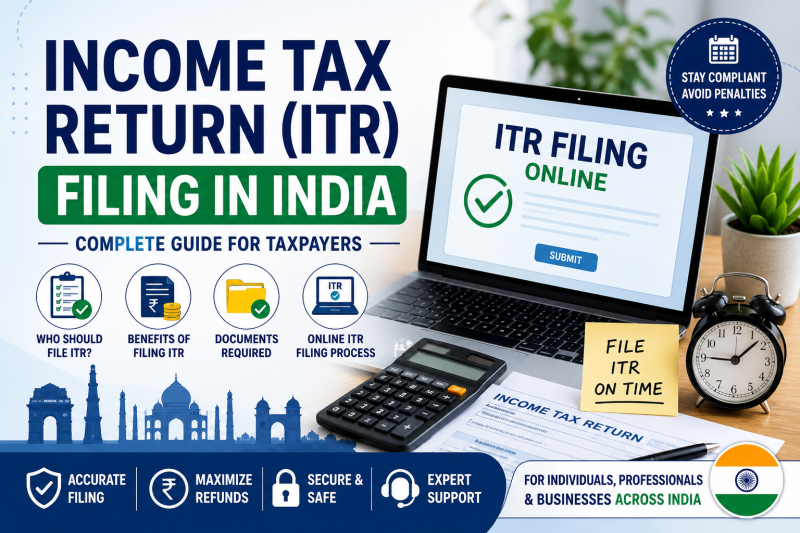
Income Tax Return (ITR) Filing in India – Complete Guide for Taxpayers
Income Tax Return (ITR) filing is one of the most important financial responsibilities for taxpayers in India. It is the process through which individuals, professionals, and businesses report their income, deductions, taxes paid, and other financial details to the Income Tax Department.
With the growth of digital tax systems, online ITR filing has become easier and more transparent. Proper and timely filing helps taxpayers maintain financial records and ensure compliance with income tax regulations.
What is Income Tax Return (ITR)?
Income Tax Return is a prescribed form used by taxpayers to provide information about their income and tax details for a particular financial year.
An ITR includes details related to:
Salary Income
Business or Professional Income
House Property Income
Capital Gains from Shares, Mutual Funds, or Property
Interest and Other Income
Tax Deductions and Exemptions
Tax Deducted at Source (TDS)
Tax Payable or Refund Details
After submission, the Income Tax Department processes the return based on the information provided by the taxpayer.
Who Should File Income Tax Return in India?
Income Tax Return filing requirements depend on income, financial activities, and conditions specified under income tax laws.
Generally, ITR filing is applicable for:
Salaried Individuals
Business Owners
Professionals and Consultants
Freelancers
Investors having Capital Gains
Taxpayers claiming Income Tax Refund
Persons having specified financial transactions
Many taxpayers also file income tax returns voluntarily to maintain financial history and proper income records.
Benefits of Filing Income Tax Return
1. Helps in Loan Applications
Income Tax Returns work as important financial records. Banks and financial institutions may consider ITR documents while processing:
Home Loans
Business Loans
Vehicle Loans
Other Credit Facilities
2. Claim Income Tax Refund
Many taxpayers have excess tax deducted through TDS or advance tax payments.
Filing an Income Tax Return allows taxpayers to claim eligible refunds from the Income Tax Department.
3. Acts as Income Proof
ITR is considered an important financial document and may be useful for:
Financial verification
Visa processing
Loan requirements
Business documentation
4. Carry Forward Eligible Losses
Certain losses such as business losses and capital losses can be carried forward to future years as per income tax provisions when returns are filed within applicable timelines.
5. Better Financial Management
Regular ITR filing helps individuals and businesses maintain organized financial records and improves financial planning.
Documents Required for ITR Filing
Before filing an Income Tax Return, taxpayers should keep the following documents ready:
PAN Card
Aadhaar Details
Bank Account Information
Form 16 (for salaried employees)
Form 26AS
Annual Information Statement (AIS)
Bank Statements
Investment Details
Home Loan Details
Capital Gain Statements
Business Income Records
Maintaining proper documents helps in accurate and error-free filing.
Types of ITR Forms in India
The Income Tax Department provides different ITR forms depending on the type of taxpayer and nature of income.
ITR-1
Generally applicable for eligible resident individuals having salary income and specified income sources.
ITR-2
Generally applicable for individuals having income such as capital gains and other sources where ITR-1 is not applicable.
ITR-3
Applicable for individuals and HUFs having income from business or profession.
ITR-4
Applicable for eligible taxpayers choosing presumptive taxation schemes.
Selecting the correct ITR form is important for proper income reporting.
Common Mistakes While Filing Income Tax Return
Taxpayers should avoid common errors such as:
Choosing incorrect ITR form
Not matching income with AIS/Form 26AS
Missing bank interest income
Incorrect deduction claims
Wrong bank account details
Incorrect capital gain calculation
Not verifying ITR after submission
Careful review before filing helps prevent unnecessary corrections and compliance issues.
Importance of Accurate ITR Filing in Digital India
Income tax compliance in India is becoming increasingly technology-driven. Information from banks, employers, investment platforms, and various financial institutions is now available through digital reporting systems.
Therefore, taxpayers should ensure accurate reporting of income, deductions, and tax details before submitting their return.
Conclusion
Income Tax Return filing is an essential part of responsible financial management. Timely and accurate filing helps taxpayers maintain proper financial records, claim eligible benefits, and stay compliant with income tax requirements.
Understanding income details, maintaining documents, selecting the correct ITR form, and verifying information carefully are important steps for successful ITR filing.
Service Locations
Income Tax Return (ITR) Filing Services Available Across India
ITR Filing in Dehradun | ITR Filing in Rudrapur | ITR Filing in Kashipur | ITR Filing in Haridwar | ITR Filing in Haldwani | ITR Filing in Rishikesh | ITR Filing in Roorkee | ITR Filing in Uttarakhand | Online ITR Filing Across India